



// VIDEO GUIDE
// STEP-BY-STEP INSTRUCTIONS
STEP 01
Fold your sheet of A4 paper along the diagonal lines shown in DIG. 1
STEP 02
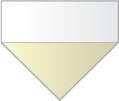
You should get the shape shown in DIG. 2
STEP 03
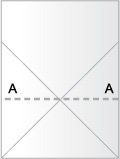
Open it out to give DIG. 3 and fold along the dotted line shown
STEP 04
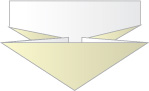
Push in from the two points labelled A in DIG. 3 to give the shape in DIG. 4.
STEP 05
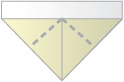
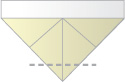
Now flatten out this form and fold along the dotted lines in DIG. 5. You should find you are folding in flaps created by the previous folds.
STEP 06
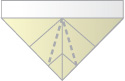
This should give you the form in DIG. 6. Again now fold along the dotted line which gives DIG. 7
STEP 07
Fold along the two dotted lines in DIG. 7 again this is just bringing in the two top flaps.

STEP 08
This should give you the form in DIG. 8

STEP 09
The triangular flap in the center (underneath the two flaps you just produced) should have two pockets. Tuck the flaps produced in step 7 into these pockets as shown in DIG. 9

STEP 10
You should be left with a piece of paper looking like DIG. 10
STEP 11
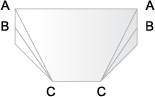
Now turn the plane over and fold along the lines labelled AC and BC in DIG. 11. These folds are very important if you want to produce a plane that flies absolutely level.
// HOW TO FLY
This plane flies well indoors but is useless outdoors as the slightest breeze will make it crash. Hold it very near its shorter edge (the front) underneath the plane. Throw with a pushing motion or overarm so that when you let go it will be level or very slightly tilted downwards. You should find that this plane will glide very slowly for quite a long distance indoors.
// YOU MIGHT ALSO LIKE
Nose Heavy Paper AirplaneGreat plane that flies equally well as the Floating Paper AirplaneCobra Paper AirplaneAlex’s own design — flies straight and fast, amazing to watchFlying Fish Paper AirplaneOne tricky fold but flies brilliantly in a straight lineLightning Paper AirplaneAlex’s design — looks like the Sabretooth but flies differently
Also by this author: free digital marketing cheat sheets